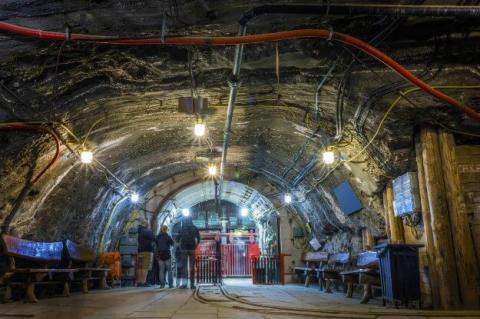
Underground mining depends entirely on a steady, uninterrupted supply of high-voltage power to keep production moving. From hard-rock drilling faces to deep coal seams, critical operations like continuous ventilation, active dewatering pumps, and heavy material haulage demand tough electrical distribution equipment built to withstand harsh, damp subterranean environments.
Key Takeaways
- Power Supply Integrity: Continuous underground production relies on high-durability power distribution networks that prevent unexpected downtime.
- System Modular Components: Specialized switch houses, power centers, transformers, and junction boxes must operate together seamlessly.
- Severe Duty Ratings: Equipment needs built-in protection against coal dust, pooling water, extreme vibration, and confined working spaces.
- Active Fault Safety: Integrated ground-fault monitoring and rapid circuit breakers isolate electrical issues before workers get hurt.
- Custom Engineering: Tailoring sub-surface electrical configurations allows mines to expand production runs without overloading circuits.
Why Is Electrical Power Reliability So Critical Underground?
Unplanned electrical outages deep underground instantly halt production and jeopardize crew safety. Power frequently travels miles from surface substations down to working faces, requiring constant voltage transformation, circuit protection, and continuous monitoring along the way. The reality on the ground is that a single breaker trip can shut down vital ventilation fans, stop conveyor belts, and submerge active headers.
Mining down below presents raw, aggressive conditions that quickly destroy standard commercial hardware. High-humidity air, fine particulate dust, heavy machinery collisions, and restricted clearance spaces put massive stress on power systems. Choosing rugged electrical distribution equipment designed for heavy continuous draw keeps deep operations fully functional and safe.
What Components Form a Complete Mining Electrical System?
A reliable underground power network depends on interconnected heavy-duty components that step down, switch, and route electricity. Transformers change raw supply voltages down to usable machine power. Switch houses isolate high-voltage feeder lines, while power centers convert high incoming feeds into low-voltage working runs right near the working face.
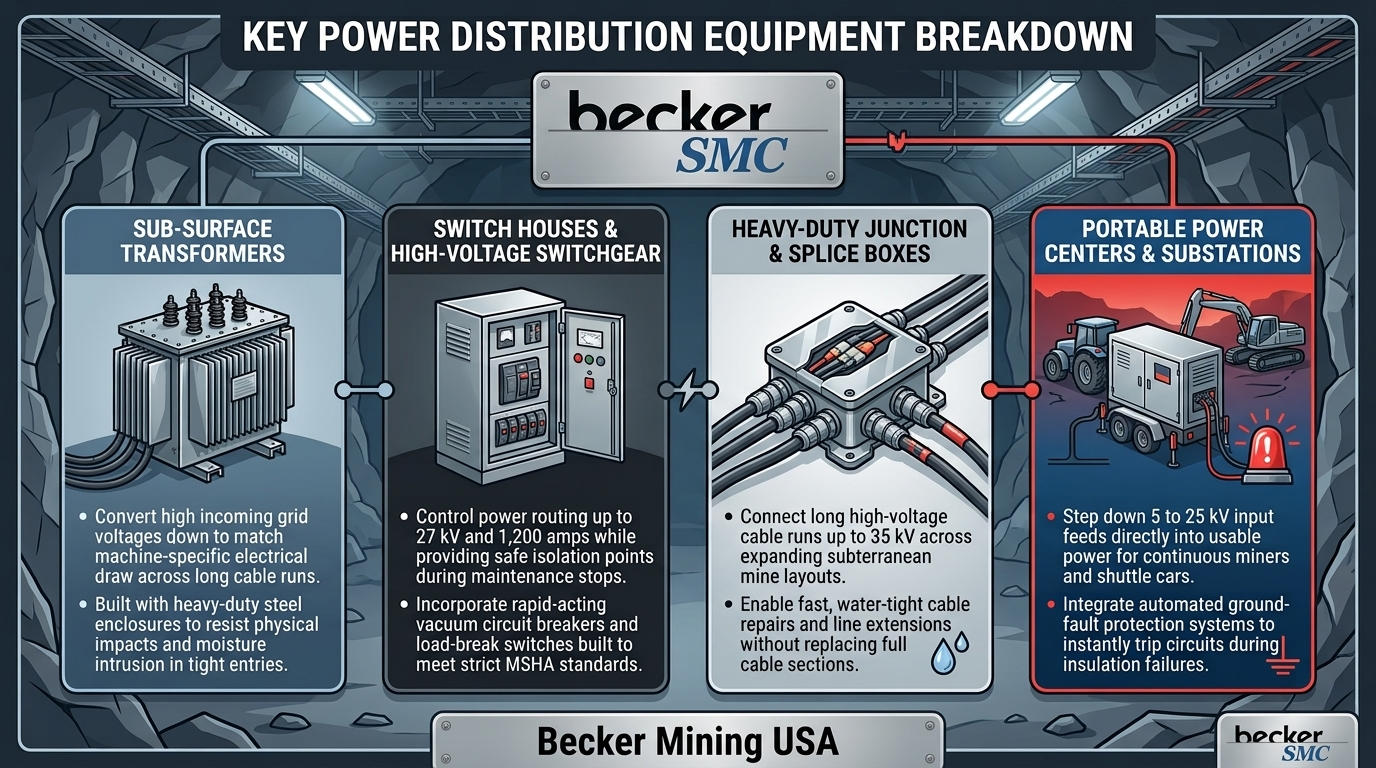
Key Power Distribution Equipment Breakdown
- Sub-Surface Transformers
- Convert high incoming grid voltages down to match machine-specific electrical draw across long cable runs.
- Built with heavy-duty steel enclosures to resist physical impacts and moisture intrusion in tight entries.
- Switch Houses & High-Voltage Switchgear
- Control power routing up to 27 kV and 1,200 amps while providing safe isolation points during maintenance stops.
- Incorporate rapid-acting vacuum circuit breakers and load-break switches built to meet strict MSHA standards.
- Heavy-Duty Junction & Splice Boxes
- Connect long high-voltage cable runs up to 35 kV across expanding subterranean mine layouts.
- Enable fast, water-tight cable repairs and line extensions without replacing full cable sections.
- Portable Power Centers & Substations
- Step down 5 to 25 kV input feeds directly into usable power for continuous miners and shuttle cars.
- Integrate automated ground-fault protection systems to instantly trip circuits during insulation failures.
GET IN TOUCH
In a hurry? Call us at 276-285-3841
How Does Purpose-Built Equipment Keep Miners Safe and Equipment Working?
Purpose-built electrical systems prevent ground faults, arc flash incidents, and electrical fires through heavy structural shielding and rapid automated disconnects. Matching equipment precisely to machine power draw stops thermal overload in tight space entries.
Equipment Protection Focus
- Fault Isolation: Advanced vacuum breakers disconnect shorted circuits in milliseconds to stop damage from spreading down the feeder.
- Ground Monitoring: Continuous ground wire monitors trip power instantly if a cable sleeve takes damage or loses ground continuity.
Practical Underground Servicing
- Visible Breaker Isolation: Mechanical disconnect switches give technicians clear visual proof that power is off before touching conductors.
- Ruggedized Enclosures: Heavy-gauge steel shells keep out mud, corrosive mine water, and airborne particulates during daily blasting operations.
Essential Mining Power Comparison
|
|
|
|
|
|
|
|
|
|
|
|
|
|
|
|
|
|
|
|
|
|
|
|
|
Primary Sub-Surface Electrical Terminology
- Power Center: A portable sub-surface substation that receives high primary voltage and drops it down to operational levels for production machinery.
- Vacuum Circuit Breaker: A high-voltage switching device that uses a vacuum environment to quench electrical arcs instantly when isolating fault conditions.
- Explosion-Proof Enclosure: A heavily reinforced housing designed to contain internal electrical explosions and prevent ignited gases from escaping into coal seams.
- Power-Factor Correction: The process of using enclosed capacitor banks to improve electrical efficiency and reduce voltage drop across multi-mile cable paths.
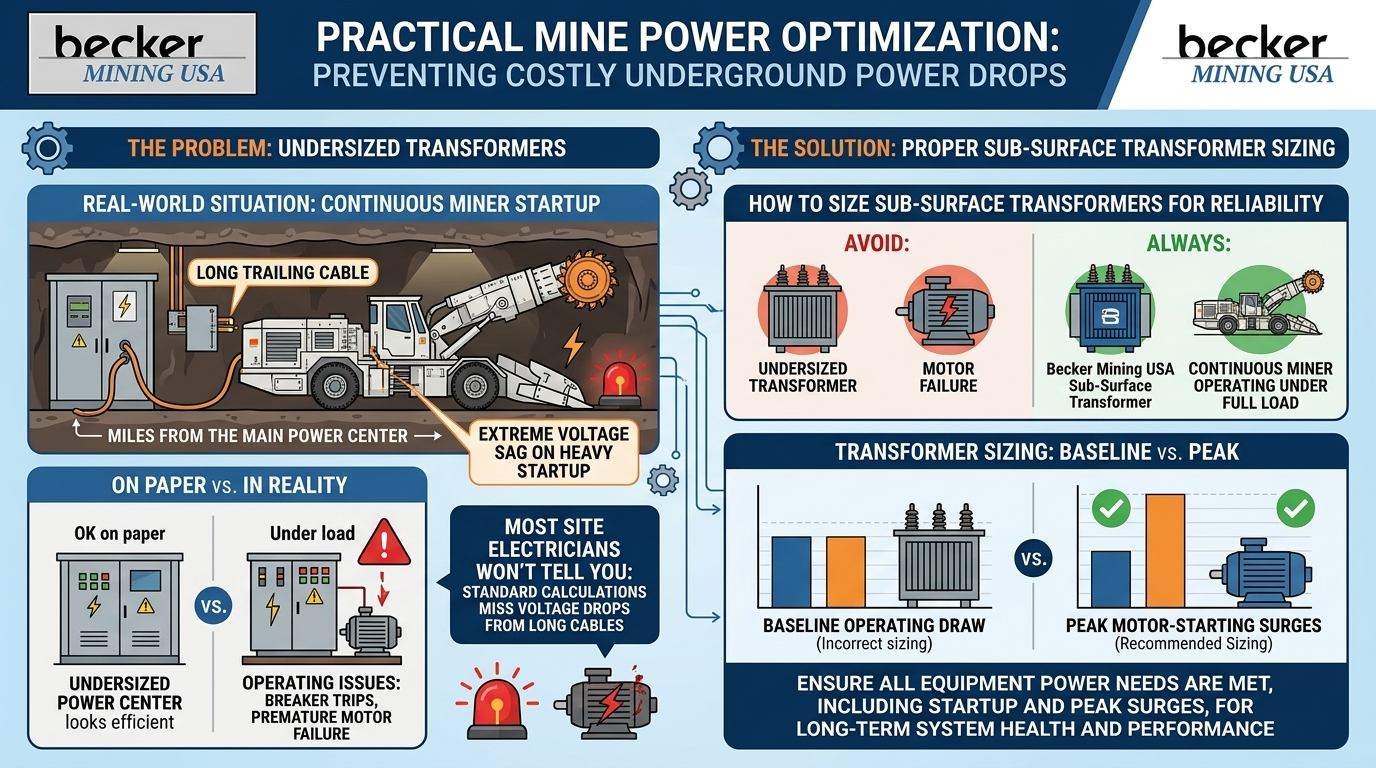
Field Insight: Practical Mine Power Optimization
Preventing Costly Underground Power Drops: Here is the part most site electricians won't tell you: standard power calculations rarely account for the extreme voltage sag caused by long trailing cables on heavy equipment startup. Undersized power centers might run fine on paper, but when a continuous miner starts grinding under full load miles from the main drift, the resulting voltage drop causes breaker trips and premature motor failure. Always size your sub-surface transformers for peak motor-starting surges rather than baseline operating draw.
GET IN TOUCH
In a hurry? Call us at 276-285-3841
Custom Mine Power Planning Step-by-Step
- Calculate Maximum Surge Loads
- Map total operational loads including continuous miners, longwalls, ventilation fans, and main dewatering pumps.
- Account for future working face expansions and increased distribution distances down the main entry.
- Select Duty-Rated Hardware
- Choose MSHA-compliant switch houses and power centers rated for the exact humidity and ambient dust levels.
- Integrate power-factor correction capacitor banks to maintain stable voltage across long electrical runs.
- Install Automated Monitoring
- Deploy continuous ground-fault protection units and Arc Guard systems to protect workers from electrical arcs.
- Establish routine thermal imaging schedules to detect hot spots on junction box connections before failures occur.
Ready to Upgrade Your Underground Power Infrastructure?
Reliable sub-surface power requires heavy-duty equipment engineered specifically for high moisture, heavy dust, and continuous production demand. Becker Mining USA provides field-tested switch houses, custom power centers, transformers, and junction boxes built to handle demanding mining conditions while keeping your operations fully compliant. Call Becker Mining USA Today to speak with an experienced mine power engineer about your custom equipment needs.
Frequently Asked Questions
Q: What is electrical distribution equipment in underground mining?
A: Underground power distribution equipment includes all transformers, power centers, switch houses, switchgear, junction boxes, and circuit breakers used to safely route electricity. These systems take high surface voltage, step it down, and safely send it to machinery working deep underground.
Q: Why is power distribution equipment so important down in a mine?
A: It keeps vital operations like ventilation fans, dewatering pumps, conveyors, and mining machines running continuously and safely. A proper setup protects crews from shock hazards while preventing sudden power outages that stop production runs.
Q: What voltages do underground mine power systems typically run on?
A: Mining power systems typically accept high-voltage feeds between 5 kV and 25 kV at power centers, while switch houses handle up to 27 kV. Transformers then step this high voltage down to operational levels required by specific equipment.
Q: What specific gear does Becker Mining USA supply for mine power systems?
A: Becker Mining USA manufactures transformers, switch houses, power substations, junction boxes, capacitor banks, vacuum breakers, explosion-proof gear, and longwall power systems. They also supply custom E-Houses and protective Arc Guard modules.
Q: Can underground power equipment be custom engineered for specific mine layouts?
A: Yes, mine electrical systems can be tailored to match specific operating loads, long cable routes, physical space limits, and expansion plans. Custom engineering ensures equipment matches real-world mining conditions rather than forcing operators to use off-the-shelf hardware.
Products We Offer:
- Explosion Proof Equipment
- Transformers
- Arc Guard
- Longwall Electrical Systems
- Capacitor Trip Devices
- Electrical Equipments like capacitor banks, switch houses, junctions, and splice boxes.
Power up your productivity with Becker Mining's ground fault relays - the reliable and efficient solution for all your power distribution needs. Call us today!