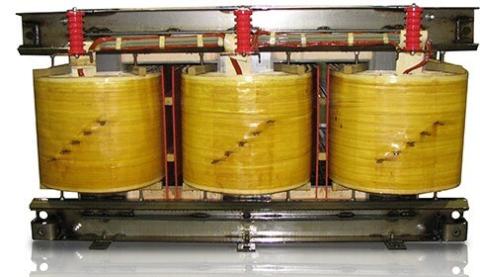
Mining environments punish standard equipment until it cracks. Keeping a site productive requires a power grid built to survive relentless vibration, corrosive dust, and immense shifting loads. Becker Mining USA delivers integrated electrical and communication networks that keep the power flowing and your crew safe when conditions get brutal.
Key Takeaways
- Power the entire line: Maintain steady energy distribution from primary extraction points down to underground ventilation fans.
- Slash costly downtime: Minimize production stalls by deploying ruggedized transformers and distribution units built for high-demand loads.
- Remove crew from danger: Leverage automated control centers to minimize manual exposure in high-risk extraction zones.
- Isolate faults instantly: Deploy intelligent switchgear that stops electrical surges before they cascade through the whole site.
- Unify data and power: Integrate fiber optic and wireless communication layers to keep surface operators connected with underground teams.
What Exactly Are Electrical Systems for Mining and Why Do They Fail Under Pressure?
The term electrical systems for mining refers to the specialized, heavy-duty network of generation, distribution, control, and monitoring hardware designed to survive harsh industrial environments. Standard components crumble under the moisture, dust, and vibration found on a typical site. Implementing a ruggedized infrastructure prevents unexpected power drops, mitigates safety risks, and keeps heavy equipment operating smoothly without constant mechanical strain. The reality on the ground is that mining power grids face conditions that would instantly wreck standard commercial systems. When a conveyor or a high-voltage drill loses power, production grinds to a complete halt, costing thousands of dollars every minute.
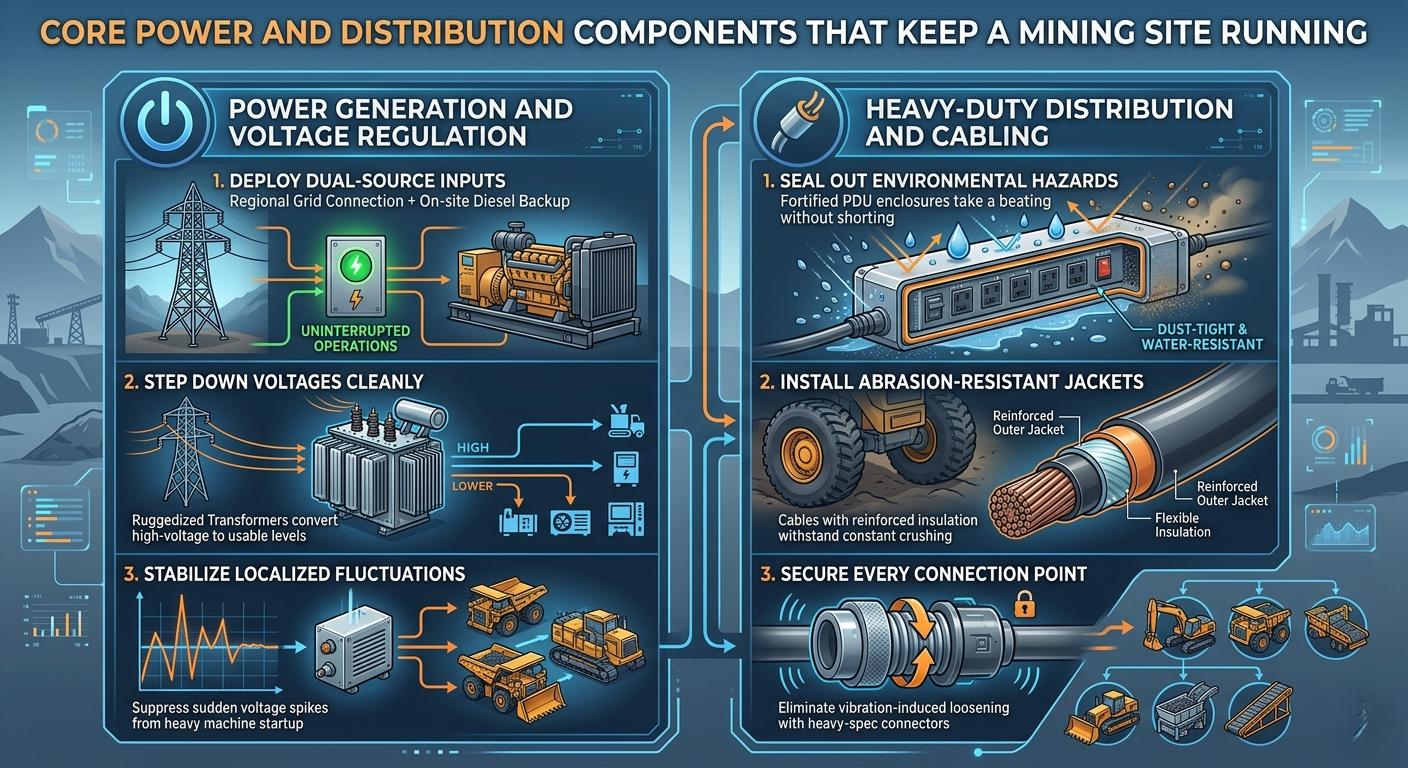
What Are the Core Power and Distribution Components That Keep a Site Running?
The backbone of mining energy management relies on specialized transformers, heavy-duty power distribution units (PDUs), and fortified cabling. These components take high-voltage inputs from the main utility grid or large on-site diesel generators and safely reduce it to usable levels. This ensures that massive continuous loads do not cause voltage drops or severe thermal damage across your network.
Power Generation and Voltage Regulation
- Deploy dual-source inputs: Combine regional grid connections with massive, on-site diesel backup generators to guarantee uninterrupted operations.
- Step down voltages cleanly: Utilize ruggedized transformers to convert high-voltage supply lines down to exact equipment requirements.
- Stabilize localized fluctuations: Suppress sudden voltage spikes caused by the simultaneous startup of multiple heavy machines.
Heavy-Duty Distribution and Cabling
- Seal out environmental hazards: Use PDUs wrapped in dust-tight, water-resistant enclosures that take a beating without shorting out.
- Install abrasion-resistant jackets: Run heavy-duty cables featuring reinforced, flexible insulation to withstand constant crushing forces from mobile equipment.
- Secure every connection point: Eliminate weak terminal points by utilizing heavy-spec connectors that resist vibration-induced loosening.
GET IN TOUCH
In a hurry? Call us at 276-285-3841
How Do Modern Control and Motor Systems Prevent Unplanned Equipment Stoppages?
Motor Control Centers (MCCs) and advanced switchgear systems function as the operational brain, regulating the massive electrical currents required by crushers, conveyors, and ventilation fans. These systems protect expensive motors from overcurrent conditions, balance shifting loads, and allow teams to manage operations from a distance. Here is the part most contractors won't tell you: standard control panels will overheat and trip constantly under these cyclic loads.
The Strategic Framework for Industrial Motor Management
- Centralized Motor Regulation: House all circuit breakers, relays, and Variable Frequency Drives (VFDs) inside a centralized, climate-controlled MCC enclosure. This shields sensitive electronics from ambient coal or rock dust.
- Controlled Soft-Starting: Program VFDs to ramp up motor speeds gradually. This practice eliminates sudden mechanical jerks, reduces inrush current spikes, and protects conveyor belts from tearing.
- Instantaneous Fault Isolation: Calibrate heavy-duty switchgear to detect downstream faults instantly. If a pump shorts out, the switchgear trips that isolated line within milliseconds, keeping the rest of the mine powered up.
- Remote Diagnostics Integration: Route real-time motor performance metrics directly to surface control rooms. This lets maintenance teams spot a failing bearing or an overheated winding long before a catastrophic failure occurs.
What Role Do Automation and Communication Platforms Play in Real-Time Monitoring?
Modern industrial networks combine Programmable Logic Controllers (PLCs), SCADA software, and rugged communication backbones to track energy use and equipment health automatically. This digital layer eliminates the need for manual, high-risk inspections in dangerous zones by streaming precise diagnostics straight to the surface. It transforms a simple power grid into an intelligent, self-monitoring asset.
Operational Visibility
- Deploy industrial PLCs: Automate sequential equipment startups to prevent massive, site-wide power surges.
- Utilize SCADA software: Map out your entire electrical footprint on visual screens for instant troubleshooting.
- Embed IoT sensors: Monitor real-time temperature profiles on critical transformers to catch insulation breakdowns early.
Network Integrity
- Pull fiber-optic backbones: Run high-speed fiber lines down the main shaft to handle massive data loads without electromagnetic interference.
- Deploy industrial Ethernet: Connect automated machines with ruggedized switches that handle extreme ambient heat.
- Extend wireless coverage: Establish underground wireless networks to track mobile equipment and maintain constant data sync with the surface.
Traditional Power Infrastructure vs. Modern Integrated Architecture
|
|
|
|
|
|
|
|
|
|
|
|
|
|
|
|
|
|
|
|
Critical Terms for Rugged Industrial Power Networks
- Motor Control Center (MCC): A central assembly that controls some or all electric motors in an industrial application.
- Variable Frequency Drive (VFD): An electrical device that regulates motor speed and torque by varying frequency and voltage.
- Switchgear: A combination of electrical disconnect switches, fuses, or circuit breakers used to control, protect, and isolate electrical equipment.
- Arc Flash Protection: Specialized safety devices designed to detect light or pressure changes from an electrical arc and trip breakers before explosive damage occurs.
- Ground Fault Circuit Interrupter (GFCI): A fast-acting circuit breaker designed to shut off electric power in the event of a ground-fault, protecting personnel from shocks.
Field Insight: The Hidden Cost of Inadequate Cable Management
Out in the field, most unexpected outages do not stem from major transformer explosions. They happen because someone used standard industrial cabling where they needed heavy-duty mining-spec insulation. Rockfall, constant machine shifting, and acidic underground water will eat through standard jackets in months. Investing in heavy-wall, vulcanized rubber or polyurethane jackets is what prevents a routine shift from turning into an expensive, multi-hour tracking and repair nightmare.
GET IN TOUCH
In a hurry? Call us at 276-285-3841
Putting Your Energy Infrastructure Strategy into Motion
To secure your operation against unexpected blackouts and maintain total compliance with federal safety mandates, your engineering team needs a clear path forward.
- Conduct a Load Study: Map out the peak power draws of your current equipment to ensure transformers are not running near thermal limits.
- Upgrade to Intelligent MCCs: Replace aging, manual switch panels with centralized motor control centers featuring integrated digital communication ports.
- Deploy Becker Mining USA Solutions: Partner with our field engineers to install ruggedized, site-specific electrical systems for mining that protect your crew and maximize your daily production tons.
Fueling the Future of High-Output Mining Operations
Keeping a mine profitable requires an electrical backbone that refuses to quit under grueling conditions. Becker Mining USA engineers heavy-duty, integrated power and communication networks that survive the realities of field operations. Our systems deliver total operational control, protect your workforce, and eliminate the unexpected power drops that kill your daily production margins.
Ready to eliminate unexpected downtime and fortify your site infrastructure? Call Becker Mining USA today to discuss your custom electrical systems for mining deployment.
Frequently Asked Questions
Q: What are electrical systems for mining used for on a job site?
A: These specialized networks manage the safe generation, distribution, and control of electricity across a mining operation. They power everything from massive surface crushers and underground ventilation fans to deep-hole drills and continuous haulage conveyors.
Q: Why do underground operations require specialized power components?
A: Underground sites feature tight spaces, moisture, explosive gases, and lack of natural airflow. Standard gear fails instantly or poses a severe fire risk, meaning systems must be heavily insulated, explosion-proof, and tightly monitored.
Q: How does a Motor Control Center improve daily site safety?
A: An MCC centralizes all high-voltage motor starters and breakers into one protected enclosure. This allows technicians to operate, test, and troubleshoot heavy equipment controls from a distance, drastically reducing manual exposure to high-voltage hazards.
Q: What is the advantage of linking automation with power distribution?
A: Connecting PLCs and SCADA software to your electrical grid lets you monitor power draws and system health in real time. It allows the system to automatically isolate minor electrical faults before they cause site-wide blackouts.
Q: Who engineers dependable power networks for American mines?
A: Becker Mining USA designs, manufactures, and deploys integrated electrical and communication solutions built specifically to handle the brutal environmental demands of both surface and underground mining operations across the United States.
Products We Offer:
- Explosion Proof Equipment
- Transformers
- Arc Guard
- Longwall Electrical Systems
- Capacitor Trip Devices
- Electrical Equipments like capacitor banks, switch houses, junctions, and splice boxes.
Power up your productivity with Becker Mining's ground fault relays - the reliable and efficient solution for all your power distribution needs. Call us today!