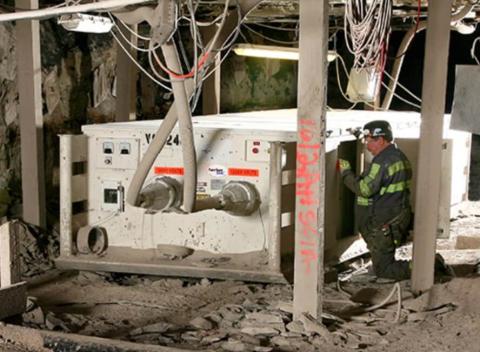
Mining operations depend on safe, hard-working electrical infrastructure every single day down in the shafts. An industrial power system plays a critical role in powering heavy equipment, supporting communication networks, protecting crews, and keeping production moving without unexpected stoppages. Across high-risk underground sites, following safety standards is not optional—it is essential for reducing electrical hazards, preventing expensive downtime, and meeting strict MSHA regulatory requirements.
At Becker Mining USA, site safety remains our top operational priority. We build rugged electrical distribution gear, communications, and monitoring solutions designed to handle the toughest underground conditions across American mines. Our site-tested technology helps mine managers improve power reliability while keeping their crews fully protected.
Key Takeaways
- Protect crews and expensive machinery by deploying power infrastructure built strictly to MSHA safety rules.
- Stop sudden power surges, ground faults, and explosive arc flashes before they knock out your active face.
- Boost site uptime with continuous insulation monitoring, heavy-duty surge suppression, and solid neutral grounding systems.
- Train your electricians regularly and stick to preventive maintenance to catch small wiring faults early.
- Partner with Becker Mining USA for fully compliant transformer units, switchgear, and leaky feeder comms networks.
Why Are Safety Standards Critical for Underground Power Networks?
Operating high-voltage power networks in underground mines requires strict adherence to safety standards to prevent catastrophic equipment failures and fatal electric shocks. Moist coal dust, heavy vibration from continuous miners, and tight spaces create an extreme operating environment. Without strict engineering rules, minor cable damage quickly turns into a massive site fire.
Mining operations run in some of the harshest environments on earth. Underground systems face severe physical abuse every shift:
- High humidity, water pooling, and constant underground moisture
- Fine coal and mineral dust buildup inside enclosures
- Heavy equipment vibration shaking terminal connections loose
- Extreme power surges from high-tonnage conveyor startups
- Rapid temperature swings in main intake airways
- Difficult maintenance access down narrow haulage drifts
Ignoring safety protocols leads straight to blown transformers, ruined haulage schedules, and injured miners. Adhering to proven design standards gives your site distinct operational advantages:
- Shield your electricians and miners from lethal shock hazards
- Keep continuous miners and shuttle cars running without random trips
- Cut emergency repair bills by catching insulation breakdown early
- Extend the working life of expensive switchgear and trailing cables
- Stay fully compliant during surprise federal mine inspections
- Keep your emergency ventilation and hoist systems ready for anything
A tough, well-designed power grid lets your crew focus on tonnage while staying completely safe underground.
What Electrical Hazards Cause the Most Downtime in Mines?
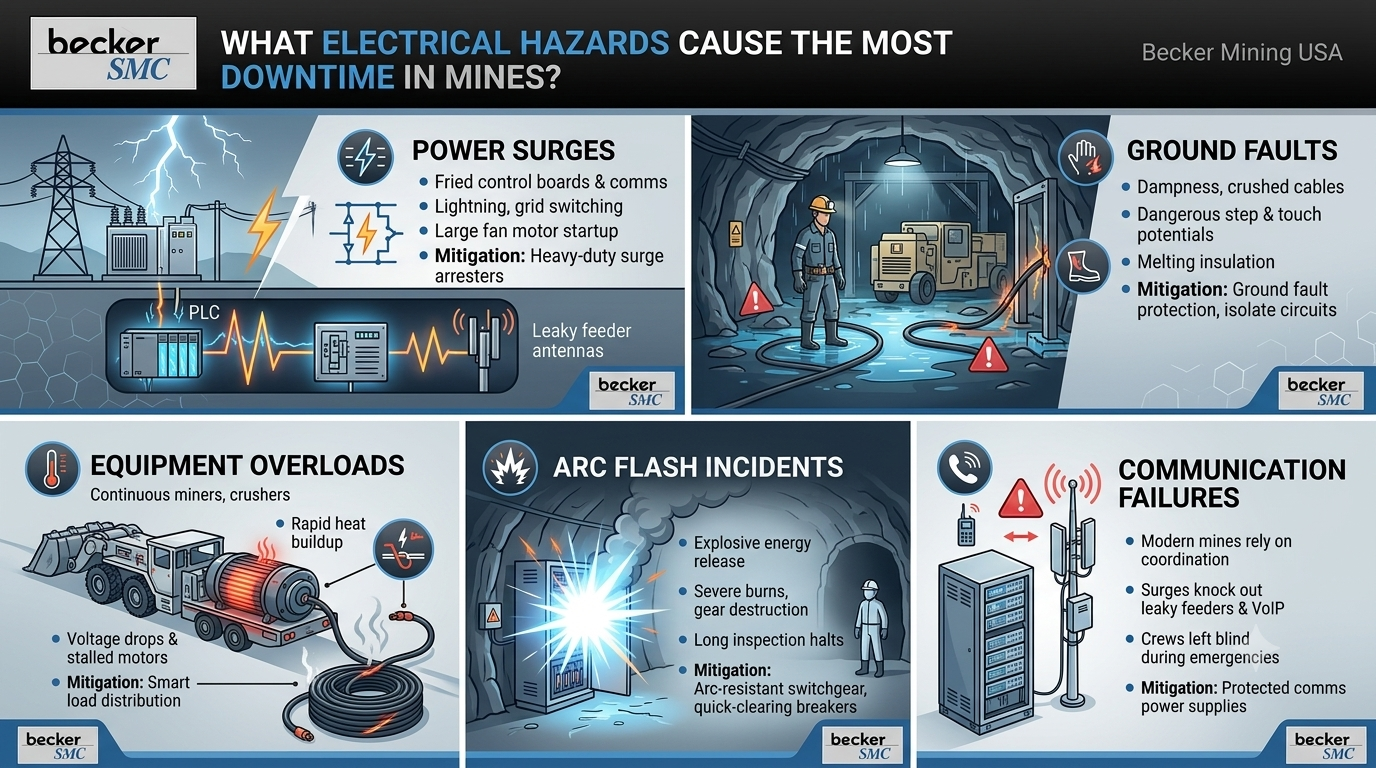
Power surges, ground faults, arc flashes, and equipment overloads represent the primary electrical hazards that trigger unexpected mining outages and safety shutoffs. Wet conditions and conductive rock dust make underground power distribution inherently volatile. Managing these specific hazards requires dedicated protective relays and heavy-duty switchgear.
Power Surges
Sudden voltage spikes can fry delicate control boards, PLC modules, and underground comms in a split second. Common triggers include:
- Direct lightning strikes on surface substations
- Utility grid switching during peak hours
- Starting up massive main mine fan motors direct-on-line
Installing heavy-duty surge arresters protects your sensitive electronics from expensive burnouts.
Ground Faults
Ground faults happen when current strays from its conductor and flows through steel frames, wet ground, or human bodies. Underground mines see high fault rates due to dampness and crushed trailing cables.
Proper ground fault protection helps you:
- Prevent dangerous step and touch potentials on machine frames
- Stop insulation breakdowns from melting cable jackets
- Isolate damaged circuits fast without dropping power to the whole mine
Equipment Overloads
Continuous miners and crushers frequently strain power feeds past their rated capacity. Pushing overloaded circuits causes:
- Rapid heat buildup inside motor windings and junction boxes
- Voltage drops that cause AC motors to stall and overheat
- Early insulation failure on expensive trailing cables
Smart load distribution keeps your equipment running cool and steady.
Arc Flash Incidents
An arc flash is an explosive release of energy caused by an electric arc through air. They happen in a fraction of a second, causing:
- Severe burn injuries to electricians working on live gear
- Total destruction of sectionalizing switchgear and power centers
- Heavy smoke accumulation in intake air courses
- Long production halts while federal investigators inspect the blast site
Deploying arc-resistant switchgear and quick-clearing breakers dramatically reduces these blast risks.
Communication Failures
Modern mines rely on clear communications to coordinate haulage and manage emergencies underground. Power surges that knock out leaky feeder systems or VoIP phones leave crews blind.
Protecting your communication power supplies ensures your miners stay connected when things go sideways.
GET IN TOUCH
In a hurry? Call us at 276-285-3841
Step-by-Step Electrical Protection Strategy
- Calculate Fault Currents and Arc Flash Hazards
- Map out your entire power grid from the surface substation down to the working face.
- Run detailed short-circuit calculations to select properly rated circuit breakers.
- Label all switchboards with clear boundaries and personal protective equipment requirements.
- Establish Solid Grounding and Neutral Protection
- Install high-resistance grounding (HRG) resistors on main transformer secondaries.
- Limit ground fault currents to safe levels (typically 15A or less) to stop arc flashes.
- Wire continuous ground wire monitors to verify ground continuity to mobile machines.
- Deploy Multi-Stage Surge and Overcurrent Protection
- Place Class I surge arresters at surface entry points to catch lightning strikes.
- Add Class II surge suppression inside underground power distribution centers.
- Calibrate protective relays to trip selectively, isolating only the damaged branch cable.
- Maintain Continuous Environmental and Insulation Monitoring
- Mount online insulation monitors to check idle cables for moisture tracking.
- Install thermal sensors on critical transformer busbars and high-voltage splices.
- Set up automated alert systems to warn electricians before a weak spot becomes a short circuit.
Workplace Safety Essentials
Shock Prevention
- Enclose all high-voltage connections in rugged, lockable NEMA-rated steel boxes.
- Interlock power center doors so power drops automatically before anyone opens the cabinet.
- Supply certified high-voltage gloves, hot sticks, and arc-flash face shields to all electricians.
Cable Management
- Hang trailing cables high on ribs using insulated cable hangers to avoid shuttle car runovers.
- Use vulcanized, flame-resistant jacketed cables built specifically for rough underground haulage.
- Inspect cable splices daily to catch outer jacket tears before water gets into the phase leads.
System Reliability
- Stagger the startup times of large pumps and belt drives to prevent major voltage dips.
- Balance single-phase loads across three-phase feeds to reduce neutral current buildup.
- Keep clean replacement breaker modules on hand at underground crosscuts for fast changeouts.
Traditional vs. Modern Mine Power Setup
|
|
|
|
|
|
|
|
|
|
|
|
|
|
|
|
|
|
|
|
|
|
|
|
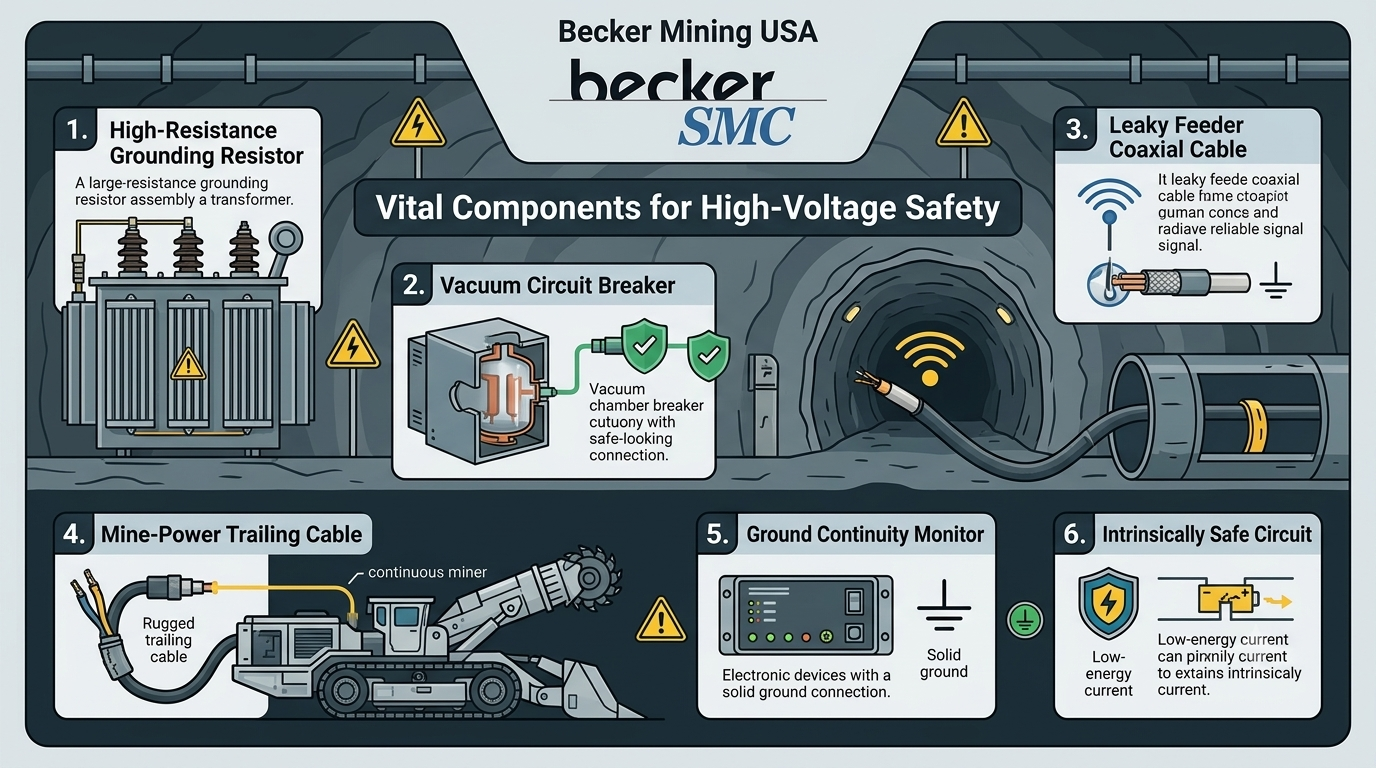
Vital Components for High-Voltage Safety
- High-Resistance Grounding Resistor: A safety resistor inserted between transformer neutral and earth that limits ground fault current to non-hazardous levels.
- Vacuum Circuit Breaker: A heavy-duty high-voltage switch that clears short circuits inside a sealed vacuum chamber to prevent open arcs underground.
- Leaky Feeder Coaxial Cable: A specially slotted cable that acts as an underground antenna, delivering reliable two-way radio comms through rock tunnels.
- Mine-Power Trailing Cable: A flexible, flame-resistant power cable designed to deliver multi-kilovolt power to moving continuous miners.
- Ground Continuity Monitor: An electronic safety device that constantly checks the integrity of the ground wire running to mobile equipment.
- Intrinsically Safe Circuit: A low-energy electrical circuit engineered so it cannot produce a spark or thermal effect capable of igniting methane gas.
GET IN TOUCH
In a hurry? Call us at 276-285-3841
Real Advice for Keeping Power On
Here's what many mine operators learn the hard way: most underground electrical trips aren't caused by sudden transformer blowouts. They start as tiny moisture tracking paths across dirty bus insulators or minor cuts in trailing cable jackets. If your electricians only clean switchgear during major turnarounds, dust and humidity will bridge those phases for you.
Installing real-time insulation resistance monitoring lets you track megohm drops continuously. When you catch a cable dropping from 100 megohms to 5 megohms on a Tuesday, you can fix the splice during a planned shift change instead of losing four hours of production on Thursday morning.
Upgrade Your Underground Power Setup Today
Upgrading your underground industrial power system stops unexpected breaker trips, protects your miners, and keeps your coal or ore moving off the face. Becker Mining USA builds tough, MSHA-compliant power distribution centers, switchgear, and communications engineered specifically for North American mines. Contact our team today by call or visit our site to schedule a complete electrical system assessment for your mine.
Frequently Asked Questions
Q: What is an industrial power system in a mining environment?
A: An industrial power system in mining is the specialized electrical network of substations, power centers, transformers, switchgear, and cables that safely distributes electricity underground. It steps down surface utility high-voltage power to run continuous miners, shuttle cars, conveyor belts, ventilation fans, and underground comms.
Q: Why are MSHA electrical safety standards so strict for underground mines?
A: MSHA safety standards exist to prevent electrocutions, mine fires, and methane explosions caused by electrical arcing in confined underground spaces. Underground mines feature damp air, coal dust, and tight working areas where a single loose wire or electrical arc can cause catastrophic injuries or site fires.
Q: What causes most ground faults on underground mining cables?
A: Ground faults are usually caused by physical damage to trailing cables, water leaking into junction boxes, or dust buildup across internal busbars. Heavy mobile equipment running over cables crushes the outer insulation, allowing phase conductors to touch the ground wire or wet mine floor.
Q: How do modern monitoring systems prevent unexpected mine outages?
A: Modern monitoring systems continuously track insulation resistance, neutral currents, temperature, and voltage balance across your underground power grid. By alerting maintenance crews to small electrical leaks before a dead short occurs, electricians can fix damaged cables during planned downtime rather than during production shifts.
Q: How does Becker Mining USA improve underground electrical safety?
A: Becker Mining USA manufactures rugged power distribution switchgear, transformer stations, arc-suppression equipment, and communication systems built specifically for tough mine conditions. Their custom-engineered power centers combine fast-acting digital circuit protection with real-time system monitoring to keep crews safe and mines operating reliably.
Products We Offer:
- Explosion Proof Equipment
- Transformers
- Arc Guard
- Longwall Electrical Systems
- Capacitor Trip Devices
- Electrical Equipments like capacitor banks, switch houses, junctions, and splice boxes.
Power up your productivity with Becker Mining's ground fault relays - the reliable and efficient solution for all your power distribution needs. Call us today!
GET IN TOUCH
In a hurry? Call us at 276-285-384