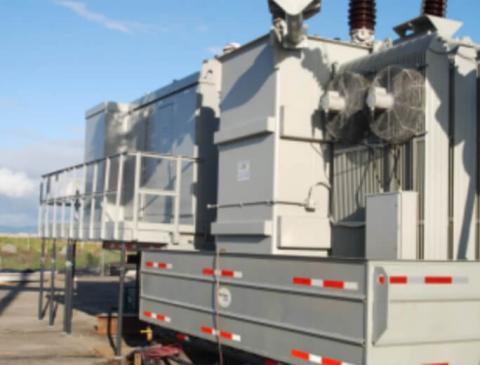
Modern industrial and mining operations rely on stable, controlled electrical systems to keep production running safely. An E house substation is a prefabricated electrical enclosure that integrates switchgear, protection systems, transformers, and control equipment into a single modular unit. It simplifies power distribution by centralizing control and enabling faster deployment compared to traditional brick-built substations.
In practical terms, an E house substation allows operators to receive, regulate, protect, and distribute electrical power from one engineered enclosure that is built and tested off-site before installation. This approach improves reliability, reduces downtime risk, and supports operations in remote or harsh environments such as mining sites and heavy industrial facilities. Companies like Becker Mining USA contribute significantly to this field by engineering robust electrical systems designed for demanding industrial conditions across the United States.
Key Takeaways
- Prefabricated Efficiency: Streamlines power infrastructure by packing critical switchgear, relays, and controls into a single, movable steel footprint.
- Factory-Tested Safety: Eliminates common field-wiring headaches and installation errors through comprehensive off-site testing.
- Rapid Deployment: Slashes project schedules by allowing site preparation and electrical assembly to happen simultaneously.
- Scalable Infrastructure: Simplifies future expansions and asset relocation as operational footprints evolve.
What Is An E House Substation?
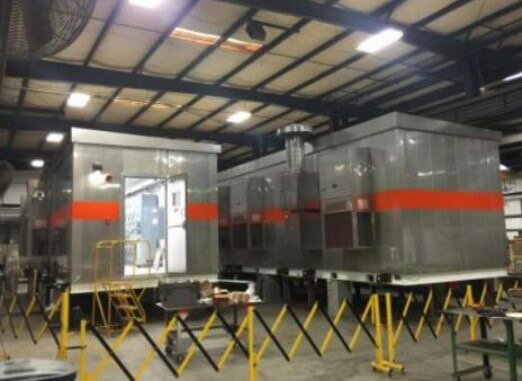
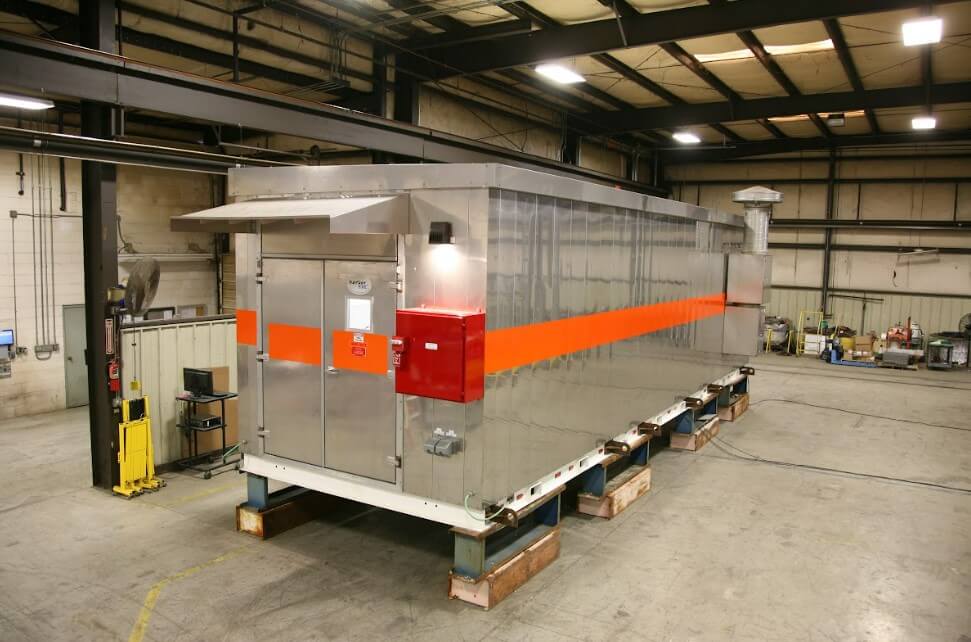
An E house substation (Electrical House substation) is a self-contained electrical facility that houses critical power distribution equipment inside a prefabricated enclosure. Instead of constructing a traditional substation on-site, engineers build and test the system in a controlled factory environment, then transport it to the operational location. This method eliminates the unpredictable variables of field construction, delivering a fully integrated, drop-in power hub that connects directly to your site infrastructure.
Operational Advantage Cluster
- Risk Mitigation: Factory assembly shields sensitive electronic relays and diagnostic components from airborne particulate damage during the critical wiring phase.
- Growth Strategy: The modular, skid-mounted design allows the entire power distribution asset to be disconnected, loaded onto a flatbed, and hauled to a new deposit or plant wing when production demands shift.
- Technical Execution: Standardized structural components easily interface with pre-existing concrete piers or gravel pad layouts, minimizing civil engineering overhead.
What Core Components Are Inside The System?
To understand how an E house substation operates, it helps to examine its internal structure. While configurations vary depending on application, most systems include a coordinated network of high-voltage isolation gear, low-voltage breakers, atmospheric controls, and real-time diagnostic systems engineered to withstand continuous heavy industrial duty cycles.
GET IN TOUCH
In a hurry? Call us at 276-285-3841
Inside the Enclosure: Commercial Equipment Comparison
|
|
|
|
|
|
|
|
|
|
|
|
|
|
|
|
|
|
|
|
How Does Power Distribution Work?
The process inside an E house substation follows a structured electrical flow designed for safety and efficiency.
- Incoming Power Supply: High-voltage electricity feeds directly from the local utility grid or prime on-site generators straight into the primary termination cabinet.
- Voltage Adjustment: Integrated dry-type or liquid-filled transformers step down the high incoming voltage to safe, usable operational thresholds.
- Fault Detection And Isolation: Smart protection relays sample line currents millisecond by millisecond, instantly choking out anomalies before they back-feed into the main system.
- Load Distribution: Clean, regulated power flows out through a dense network of low-voltage breakers to energize heavy machinery, processing belts, and ventilation fans.
- Monitoring And Control: SCADA nodes broadcast real-time telemetry back to the main dispatch office, keeping off-site teams informed of total power demand and phase health.
Why Do Heavy Industries Prefer Modular Systems?
The increasing adoption of modular substations is driven by practical operational benefits rather than theory alone.
The Strategic Framework for Deployment
- Off-Site Integration: While concrete cures on your job site, technicians build the steel enclosure and wire the switchgear inside a climate-controlled factory, shaving months off the master schedule.
- Comprehensive Validation: Engineers subject the completed unit to full-load simulation tests, verifying breaker trip timings and communication protocols before the rig ever hits the highway.
- Rapid Site Commissioning: The modular assembly arrives on-site via heavy-haul trailer, cranes onto pre-built foundations, and needs only primary input and output terminations to go live.
Where Are These Systems Applied Across Industries?
Every heavy industrial sector demands uninterrupted power, making these modular units indispensable across diverse, high-stakes operating environments.
- Surface and Underground Mining: Powers heavy draglines, longwall shearers, and ventilation shafts while standing up to severe, continuous ground vibrations.
- Oil and Gas Facilities: Delivers explosion-proof, pressurized power management solutions for remote wellheads, pumping stations, and refinery yards.
- Renewable Energy Plants: Acts as the central collection hub for vast fields of wind turbines or solar arrays, stepping up voltage for grid transmission.
- Utility Distribution Networks: Serves as a fast-deploying municipal substation replacement during major grid overhauls or rapid urban footprint expansions.
What Engineering And Design Considerations Are Critical?
Designing a reliable system requires careful planning and engineering analysis.
- Load Assessment: Calculating precise peak inrush currents ensures internal busbars won't warp under heavy inductive motor starting loads.
- Environmental Factors: Specifying specialized paint coatings and high-capacity HVAC systems counters the corrosive effects of localized coastal salt spray or dense mine dust.
- Compliance Requirements: Aligning the physical layout with NEC, IEEE, and MSHA standards guarantees the unit passes field inspection without costly retrofits.
- Expansion Planning: Allocating structural floor space for extra breaker cells allows easy integration of future machinery without building modifications.
- Cybersecurity Integration: Hardening the SCADA network interfaces shields critical infrastructure assets from external digital threats and unauthorized access.
How Is Maintenance And Operational Reliability Managed?
Although modular substations are built for durability, routine maintenance remains essential for long-term performance. The reality on the ground is that ignoring regular service intervals will turn minor component wear into an unscheduled plant-wide blackout. Here is how field teams protect these critical power assets:
- Thermal Imaging Inspection: Scan internal breaker busbars with infrared cameras quarterly to catch loose, overheating bolted connections before they melt down.
- Relay Calibration Tests: Inject secondary current signals into protection loops annually to verify microprocessors trip within their specified millisecond envelopes.
- HVAC System Cleandowns: Swap air filters and check compressor refrigerant levels monthly to stop internal dust buildup and prevent heat-induced electronics failure.
- Enclosure Seal Audits: Inspect door gaskets and cable gland entries routinely to ensure torrential downpours and blowing grit stay outside the structural shell.
GET IN TOUCH
In a hurry? Call us at 276-285-3841
What Future Trends Are Shaping Substation Design?
Electrical infrastructure is evolving quickly, and modular systems are part of that shift.
- Predictive Maintenance: Embedded edge sensors stream real-time contact wear data, alerting crews to fix components weeks before an actual breakdown occurs.
- Digital Twin Utilization: Virtual mapping allows dispatchers to simulate high-load switching sequences on a computer model before executing them in the physical yard.
- Eco-Friendly Insulation: Manufacturers are phasing out greenhouse gases in switchgear, replacing them with clean air or advanced vacuum interruption tech.
Homeowner-Focused Perspective on Industrial Power Assets
A Real-World Reality Check: Many property owners and plant operators overlook how critical upstream infrastructure is to everyday stability. When an industrial facility or a local utility grid integrates an engineered enclosure, it directly shields the surrounding community from voltage sags and blackouts. Investing in high-grade, factory-tested isolation gear doesn't just protect heavy machinery—it keeps the local power grid running smoothly and stops electrical faults from cascading into nearby neighborhoods.
Putting Your Power Strategy into Motion
Maximizing site uptime while controlling capital deployment costs requires a clean break from slow, traditional construction methods. Transitioning your infrastructure to a custom-engineered E house substation gives your operation an instantly deployable, fully hardened power hub optimized for immediate field connection. By centralizing your medium-voltage switchgear, protection networks, and smart monitoring systems into a single factory-tested platform, you insulate your business from unexpected outages and field assembly delays.
Partnering with an experienced engineering team like Becker Mining USA ensures that your power distribution framework arrives precisely matched to your load profiles and environmental realities. Take complete control of your facility's operational reliability, lower your installation overhead, and build a resilient electrical footprint ready for future expansions.
Discover how a custom E-house substation can streamline your project infrastructure today.
Frequently Asked Questions
Q: What equipment is typically housed inside a modular electrical enclosure?
A: An E house substation standard assembly contains medium-voltage switchgear, low-voltage motor control centers, protection relays, variable frequency drives, battery backup systems, and specialized HVAC units for climate control.
Q: How does off-site fabrication accelerate project commissioning timelines?
A: Building the substation in a controlled factory allows structural assembly, electrical wiring, and strict quality control testing to run concurrently with site grading and concrete foundation pouring, slashing field installation schedules by up to 30%.
Q: Can these engineered electrical houses be modified after installation?
A: Yes, high-quality units are designed with scalable modular frames, allowing field technicians to bolt on extra structural sections or install additional breaker panels as power demands increase.
Q: What environmental protections shield the internal switchgear from harsh site conditions?
A: Enclosures are built with heavy-gauge, corrosion-resistant steel, sealed with industrial gaskets, and pressurized via high-efficiency HVAC systems to completely bar dust, moisture, and corrosive gases from entering.
Q: Why is an integrated modular system more reliable than a brick-and-mortar substation?
A: Every component inside a modular unit undergoes complete system integration and interlocking operational tests before shipment, eliminating the wiring errors and component mismatches common to field-built substations.
Products We Offer:
- Explosion Proof Equipment
- Transformers
- Arc Guard
- Longwall Electrical Systems
- Capacitor Trip Devices
- Electrical Equipments like capacitor banks, switch houses, junctions, and splice boxes.
Power up your productivity with Becker Mining's ground fault relays - the reliable and efficient solution for all your power distribution needs. Call us today!