Industrial power distribution networks demand consistent reactive power compensation to maintain voltage stability. At the core of this infrastructure is the capacitor bank in substation setups, which balances power factors and prevents energy loss. However, severe utility line conditions and constant switching cycles degrade these assets over time.
Key Takeaways
- Lifespan Expectations: Expect a standard operating life of 10 to 20 years under normal substation conditions.
- Performance Drop: Watch for a declining power factor as the primary early warning indicator.
- Thermal Stress: Monitor thermal anomalies, case swelling, and localized enclosure heat.
- Financial Thresholds: Track rising part replacement costs against total equipment modernization value.
- Modern Upgrades: Integrate modern automated tuning systems to eliminate legacy transient faults.
What Does a Capacitor Bank Do in a Substation?
A capacitor bank supplies critical reactive power directly to the substation grid to improve local power factor performance. This hardware maintains systemic voltage regulation, balances heavy industrial inductive loads, and lowers utility financial penalties. Without this active compensation, lines experience severe transmission losses and voltage drops.
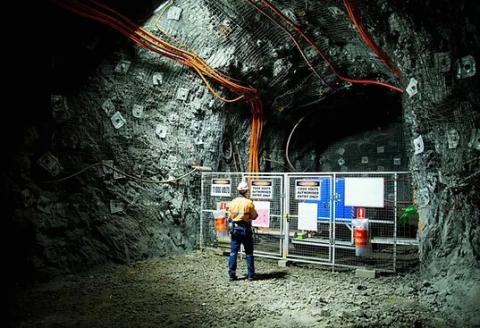
The reality on the ground is that your equipment works around the clock. Heavy mining machinery and production assembly lines constantly draw lagging current, meaning your grid infrastructure needs continuous support to avoid immediate utility penalties.
Why Does Age Matter When Evaluating Replacement?
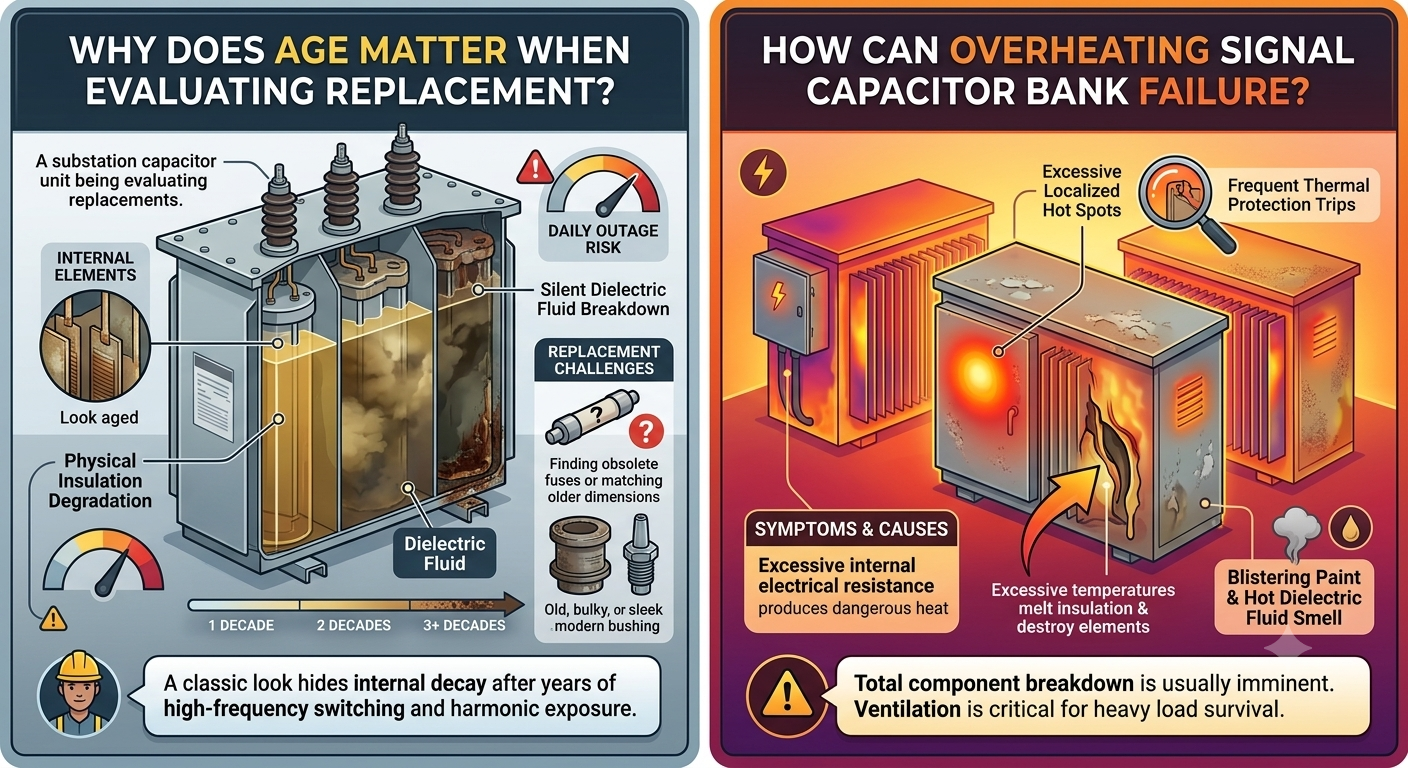
System aging causes gradual dielectric fluid breakdown and physical insulation degradation inside individual capacitor units. While a classic system might look completely functional from the outside, internal elements decay after years of high-frequency switching operations and harmonic exposure. This silent wear dramatically elevates your daily risk of an unexpected substation outage.
Most units give out after two decades of handling severe voltage spikes. Here's the part most contractors won't tell you: hunting down obsolete replacement fuses or matching older bushing dimensions turns basic repairs into an absolute nightmare.
How Can Overheating Signal Capacitor Bank Failure?
Frequent thermal protection trips and discolored unit enclosures prove that internal electrical resistance is producing dangerous heat levels. Excessive temperatures melt vital internal insulation and destroy internal elements rapidly. When localized enclosure hot spots appear during standard shifts, total component breakdown is usually imminent.
Industrial enclosures require proper ventilation to survive heavy load shifts. If you notice structural paint blistering or smell hot dielectric fluid during routine inspections, basic component servicing will no longer solve the underlying problem.
GET IN TOUCH
In a hurry? Call us at 276-285-3841
What Performance Issues Indicate a Capacitor Bank Is Wearing Out?
Declining power factor corrections and dropping reactive power output indicate that internal capacitor sections are failing. As individual internal elements clear their internal pressure fuses, the overall VAR output capability drops. Your facility will pull more lagging current from the utility provider, spiking your monthly operating expenses.
You will likely spot this issue on your monthly utility statement first. If your power factor drops toward sub-optimal levels while production schedules remain completely unchanged, your substation hardware is losing its efficiency.
When Should Physical Damage Trigger Immediate Replacement?
Visible container bulging, active dielectric fluid leaks, and cracked porcelain bushings demand immediate asset replacement to ensure workplace safety. Deformed metal cans indicate severe internal gassing and catastrophic pressure buildup. Operating a physically compromised unit risks violent case ruptures, massive arc flash incidents, and extended emergency facility downtime.
Safety must take priority over stretching old machinery budgets. A bulging metal enclosure cannot be repaired or patched, making immediate decommissioning the only legal and operational option for your field crew.
Why Are Harmonics a Growing Concern for Modern Facilities?
Modern non-linear loads like variable frequency drives and automated rectifiers inject high-frequency harmonic currents that overload older capacitor designs. These harmonic frequencies create severe resonance loops that rapidly overheat standard capacitor elements. Legacy systems lack the heavy detuning reactors needed to survive these modern, digitally driven power environments.
The equipment mix inside plants has changed completely over the last ten years. If your electrical line testing shows climbing Total Harmonic Distortion levels, running standard capacitors without integrated tuning filters will trigger repeat fuse failures.
How Do Maintenance Costs Help Determine Replacement Timing?
When the annual cost of emergency troubleshooting and replacing specialized fuses approaches new equipment capital costs, full replacement is required. Track how much production revenue vanishes during unexpected power maintenance shutdowns. Modern integrated systems feature self-monitoring setups that drastically lower long-term field labor commitments.
Repeated field service calls quickly destroy thin operational budgets. Sourcing rare vintage components adds extensive shipping delays to every simple repair, keeping your critical distribution lines entirely offline.
What Happens When System Loads Change Over Time?
Significant facility expansions and larger automated motor installations create lagging current demands that exceed original substation design capacities. A compensation system engineered a decade ago cannot stabilize a modernized industrial footprint. Undersized units run hotter and fail prematurely when forced to support massive infrastructure overloads.
Your operational power needs are rarely static. Adding new automated processing cells or heavy deep-mining ventilation fans alters your total line impedance, meaning your power factor hardware must be upsized to match the current demand.
The Strategic Framework
- Comprehensive Site Diagnostics
- Deploy localized power quality meters to record real-time Total Harmonic Distortion levels.
- Conduct thermal imaging scans across all high-voltage terminal connections and bushings.
- Economic Lifecycle Analysis
- Total the past 24 months of specialized fuse expenses and field repair hours.
- Compare ongoing utility penalty costs against the capital expense of an automated system upgrade.
- Engineering System Sizing
- Calculate your current peak inductive load requirements based on modern equipment additions.
- Specify detuned reactor sizes to block high-frequency harmonic currents safely.
- Substation Demolition and Install
- Isolate the incoming utility feed and ground all residual stored energy fields securely.
- Anchor the modernized modular structural enclosure and torque all primary busway links.
Contextual Topic Clusters
Operational Risk Management
- Arc Flash Prevention: Eliminate catastrophic container ruptures by replacing swollen, pressurized units early.
- Environmental Compliance: Prevent toxic dielectric fluid spills by removing rusted, leaking steel casings.
Technical Grid Execution
- Transient Minimization: Utilize zero-crossing switching controllers to stop dangerous localized voltage drops.
- Harmonic Suppression: Install heavy detuned iron-core reactors to handle modern solid-state drive frequencies.
Long-Term Capital ROI
- Penalty Elimination: Keep your average power factor above utility thresholds to wipe out demand surcharges.
- Loss Reduction: Lower internal transformer core temperatures by cleaning up system-wide reactive current loops.
GET IN TOUCH
In a hurry? Call us at 276-285-3841
At-a-Glance Component Comparison
|
|
|
|
|
|
|
|
|
|
|
|
|
|
|
|
|
|
|
|
|
|
|
|
Multi-Layered Entity Bullets
- Dielectric Fluid: Formulated insulating liquid that prevents internal electrical arcing between underlying capacitive film sheets.
- Detuning Reactor: Heavy copper-wound inductor wired in series to shift the system resonant frequency away from dangerous harmonic orders.
- Expulsion Fuse: An external current-limiting protection device that disconnects shorted capacitor units from the main power bus.
- Total Harmonic Distortion: Ratio metric measuring total harmonic current presence compared to the standard 60Hz fundamental power frequency.
Practical Field Advice
Field Inspection Warning: Never rely solely on remote SCADA data when auditing an aging asset. A unit can lose internal elements and drop total VAR output by 30% while drawing standard nominal phase currents. Ensure your technicians perform physical capacitance bridge tests annually to catch internal element failures before case bulging begins.
Putting Your Power Quality Strategy into Motion
Maintaining grid stability requires matching your substation hardware to modern factory floor electrical demands. Replacing an outdated capacitor bank in substation yards stops costly utility demand surcharges and protects downstream automation gear from harmonic damage. Upgrading your heavy power infrastructure builds a baseline of reliable system distribution. Contact or call Becker today!
Frequently Asked Questions
Q: What is the typical lifespan of a substation capacitor?
A: Most heavy-duty industrial units operate efficiently for 10 to 20 years. This timeline shortens drastically if the installation handles high harmonic currents or extreme summer heat inside unventilated enclosures.
Q: How do modern systems handle harmonic distortion?
A: Modern setups incorporate iron-core detuning reactors directly into the cabinet architecture. These inductors shift the natural resonance frequency downward, blocking harmonic currents from overheating the internal capacitive elements.
Q: What causes a capacitor enclosure to bulge physically?
A: Internal short circuits generate high-temperature gas pockets inside the sealed metal can. This intense internal pressure warps the structural steel casing, signaling an imminent risk of violent casing rupture.
Q: Why do utility companies penalize poor power factor ratings?
A: Low power factors force utilities to deliver excess reactive current across their lines, overloading local transformers. Providers levy heavy financial penalties to cover the cost of this systemic transmission inefficiency.
Q: Can you replace individual capacitor units within a bank?
A: Yes, single leaking or dead units can be swapped out if the structural frame and busbars remain healthy. However, if multiple sections fail consecutively, the entire asset has likely reached its operational end-of-life.
Products We Offer:
- Explosion Proof Equipment
- Transformers
- Arc Guard
- Longwall Electrical Systems
- Capacitor Trip Devices
- Electrical Equipments like capacitor banks, switch houses, junctions, and splice boxes.
Power up your productivity with Becker Mining's ground fault relays - the reliable and efficient solution for all your power distribution needs. Call us today!