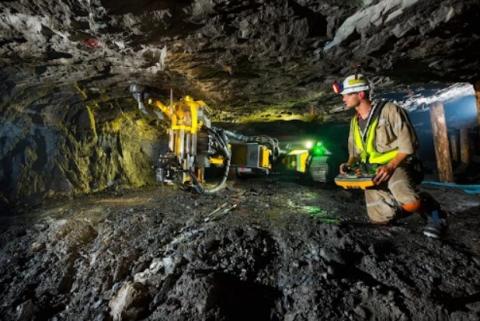
Underground mining operations face a relentless combination of environmental threats every single shift. Methane gas pockets, volatile coal dust, and moisture constantly threaten to turn a minor electrical arc into a devastating underground tragedy. To keep operations running safely without catastrophic failure, mines rely on ruggedly engineered explosion proof equipment designed specifically to handle extreme underground conditions. This equipment acts as a critical line of defense, safely managing electrical infrastructure so that internal failures don't trigger massive ambient explosions. Becker Mining USA delivers these vital, field-tested systems to keep crews protected and operations compliant under federal safety mandates across the nation.
Key Takeaways
- Internal Ignition Isolation: Certified enclosures contain internal sparks and flames, stopping them from triggering explosions in methane-heavy air.
- Severe Environment Engineering: Mining systems are built to withstand heavy impacts, vibration, and abrasive dust found in underground tunnels.
- Thermal Management Compliance: Advanced cooling and housing designs keep exterior surface temperatures well below the ignition thresholds of coal dust.
- Integrated Safety Framework: Maximizing crew safety requires linking robust power distribution with modern underground communication and monitoring tools.
What Exactly Is Certified Explosion-Proof Equipment for Mining?
Explosion-proof equipment prevents mine disasters by completely containing internal electrical faults, sparks, or thermal energy inside heavy-duty enclosures. This specialized hardware is built to allow internal gas ignitions to occur without letting escaping flames, pressurized gases, or high surface heat ignite the highly volatile methane and airborne coal dust present in underground tunnels.
The reality on the ground is that people assume this gear survives external blasts. It doesn’t. Instead, it holds the line from the inside out using precise technical features:
- Heavy-Gauge Cast Enclosures: Thick steel or aluminum housings withstand internal blast pressures without cracking or warping under load.
- Flame-Path Joints: Precision-machined joint gaps allow internal burning gases to cool down safely before reaching the outside atmosphere.
- Threaded Conduit Entries: High-tolerance, sealed cable connections block flammable air mixtures from entering or exiting the active wiring chambers.
- Low Surface Temperature Profiles: Engineered heat-sink configurations prevent the external shell from reaching the auto-ignition points of combustible materials.
When a sudden short circuit occurs within a live control box, these structural layers work together instantly. The internal blast is muffled, gases are cooled, and the surrounding mine remains entirely unaffected.
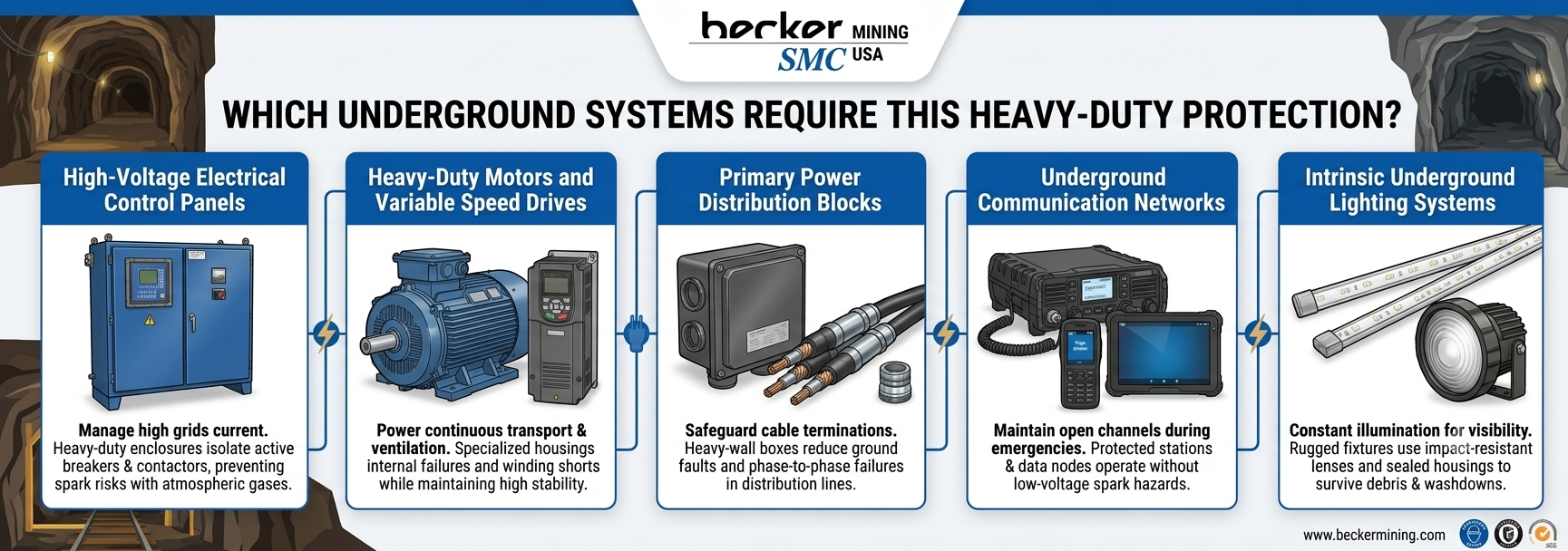
Which Underground Systems Require This Heavy-Duty Protection?
Operating electrical machinery miles beneath the surface means standard commercial hardware won't cut it. Any component handling high voltage or continuous current must feature specialized containment to eliminate spark risks.
Here is the breakdown of the essential components running day and night across underground operations:
High-Voltage Electrical Control Panels
Control panels manage the heavy electrical current moving through the mine’s main grids. Heavy-duty enclosures keep active breakers, contactors, and control circuits isolated so that standard switching arcs never interact with surrounding atmospheric gases.
Heavy-Duty Motors and Variable Speed Drives
Continuous transport systems and ventilation fans run on powerful motors that generate high thermal loads. Specialized industrial motor housings contain internal failures and winding shorts while maintaining stable operational output under continuous duty cycles.
Intrinsic Underground Lighting Systems
Maintaining visibility along the haulage ways and the working face requires constant illumination. Rugged lighting fixtures utilize thick, impact-resistant lenses and sealed housings to eliminate spark exposure while surviving flying rock debris and high-pressure washdowns.
Underground Communication Networks
When conditions change rapidly down in the hole, crews need open channels. Protected communication base stations, page phones, and data nodes remain fully operational during emergency scenarios without introducing low-voltage spark hazards into volatile air pockets.
Primary Power Distribution Blocks
Splicing and routing main power lines down the shaft demands heavy infrastructure. Main power distribution equipment relies on heavy-wall junction boxes to safeguard cable terminations, reducing the risk of ground faults and phase-to-phase failures.
GET IN TOUCH
In a hurry? Call us at 276-285-3841
Summary of Mining Equipment Solutions
|
|
|
|
|
|
|
|
|
|
|
|
|
|
|
|
|
|
|
|
|
|
|
|
|
|
|
|
|
|
How Does Protective Hardware Stop Catastrophic Mine Ignitions?
Here’s the part most contractors won’t tell you: standard industrial gear fails rapidly under the sheer physical abuse of a working mine. High-performance explosion proof equipment works by managing three specific environmental variables simultaneously.
Physical Ignition Isolation
- Smothers Internal Flame Fronts: The rigid structural design forces internal blast pressures to dissipate through tightly toleranced machined joints.
- Cools Escaping Exhaust Gases: Hot gas escapes only after traveling through long, narrow paths that reduce temperatures below explosive limits.
- Isolates live components: Solid physical barriers keep continuous switching arcs away from surrounding coal dust.
Thermal and Environmental Shielding
- Strict Surface Temperature Regulation: Machinery is engineered to maintain low thermal signatures, staying safely below the 150°C ignition point of fine coal dust layers.
- Moisture and Condensation Resistance: Specialized internal seals prevent the humid, dripping water found in deep mines from corroding live contacts and causing short circuits.
- Vibration Dampening Construction: Toughened mountings prevent heavy continuous shaking from continuous miners and shuttle cars from loosening terminal screws.
Operational Continuity Assurance
- Reduces Costly Unplanned Downtime: Stopping production for an electrical short costs thousands per minute; containment keeps the rest of the grid fully live.
- Streamlines MSHA Regulatory Compliance: Utilizing properly certified housings keeps your operation clear of costly safety citations and stop-work orders.
- Extends Total Infrastructure Lifespan: Sealed, ruggedized casings protect expensive internal electronics from corrosive mine water and abrasive stone dust.
What Specific Technical Definitions Ground Underground Electrical Safety?
To truly master underground risk mitigation, engineering teams must look past basic product brochures and focus on specific regulatory designations and technical components.
- Class I, Division 1 Location: A hazardous environment where flammable gases, vapors, or liquids are present continuously or periodically during normal operations.
- Permissible Equipment: Electrical machinery that has been formally tested and officially approved by the Mine Safety and Health Administration (MSHA) for use in gassy mines.
- Flame Path: The precise, machined matching surfaces between the cover and body of an enclosure that cool hot internal gases before they escape.
- Intrinsically Safe Circuitry: Low-energy wiring designed so that any spark or thermal effect produced under normal or fault conditions cannot ignite a hazardous atmosphere.
- Hydrostatic Pressure Testing: A mandatory manufacturing certification process where enclosures are pressurized to four times the actual blast pressure to verify total structural integrity.
Homeowner-Focused Safety Perspective
Look at underground safety like your home's breaker box, but multiplied by ten thousand. If a breaker sparks behind your drywall, the metal panel keeps the flame from catching the wood studs on fire. Down in a coal seam, that "stud wood" is invisible methane gas floating in the air. If your enclosure isn't sealed tight enough to choke out that spark instantly, the whole mountain can shift. Keeping things contained isn't about saving the component; it's about making sure everyone on the shift walks back out to the hoist at the end of the day.
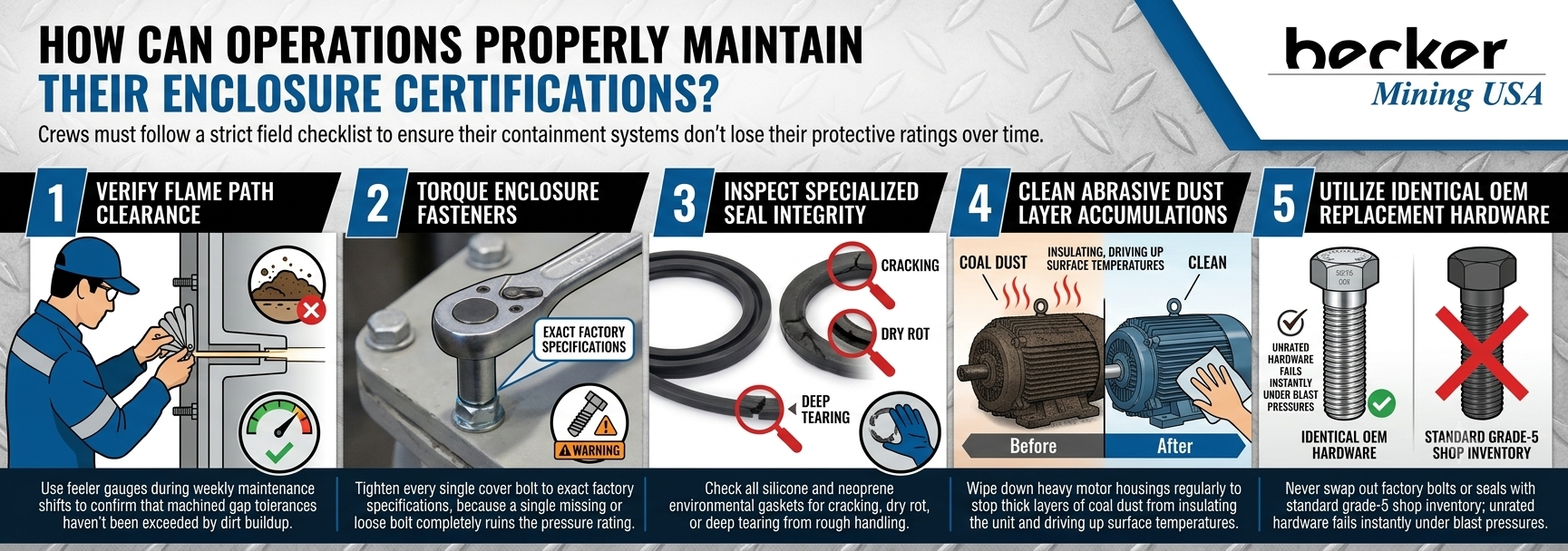
How Can Operations Properly Maintain Their Enclosure Certifications?
Even the toughest hardware degrades if it's neglected on the working face. Crews must follow a strict field checklist to ensure their containment systems don't lose their protective ratings over time.
- Verify Flame Path Clearance: Use feeler gauges during weekly maintenance shifts to confirm that machined gap tolerances haven't been exceeded by dirt buildup.
- Torque Enclosure Fasteners: Tighten every single cover bolt to exact factory specifications, because a single missing or loose bolt completely ruins the pressure rating.
- Inspect Specialized Seal Integrity: Check all silicone and neoprene environmental gaskets for cracking, dry rot, or deep tearing from rough handling.
- Clean Abrasive Dust Layer Accumulations: Wipe down heavy motor housings regularly to stop thick layers of coal dust from insulating the unit and driving up surface temperatures.
- Utilize Identical OEM Replacement Hardware: Never swap out factory bolts or seals with standard grade-5 shop inventory; unrated hardware fails instantly under blast pressures.
GET IN TOUCH
In a hurry? Call us at 276-285-3841
Ready to Harden Your Underground Electrical Infrastructure?
Upgrading your underground power distribution, communication grids, and safety tracking systems demands an experienced partner who knows the realities of working gassy mines. Becker Mining USA engineers comprehensive, field-tested systems designed to protect your crew, maintain MSHA compliance, and maximize your daily production efficiency. Do not wait for a minor electrical fault to turn into a costly, dangerous incident on the working face.
Contact our domestic support desk today to discuss your next system overhaul. Call Becker Mining USA to walk through your custom project specifications, or review our detailed technical catalog to find the exact MSHA-permissible power and communication hardware your team needs to stay safe and productive.
Frequently Asked Questions
Q: Why is explosion-proof equipment required in underground mining?
A: It safely contains internal electrical arcs and explosions so they cannot ignite ambient methane gas or fine coal dust found throughout underground workings.
Q: Can standard outdoor industrial enclosures be used inside a mine?
A: No. Standard outdoor enclosures only protect against water and weather, whereas specialized mining configurations are physically built to contain internal blast pressures and cool escaping flames.
Q: How often should flame path gaps be checked on mining enclosures?
A: Maintenance crews should inspect flame paths during scheduled weekly maintenance cycles and immediately after any component undergoes a repair or opening.
Q: What is the difference between explosion-proof and intrinsically safe?
A: Explosion-proof enclosures contain internal blasts within heavy-duty housings, while intrinsically safe systems limit the overall electrical energy so a spark cannot form in the first place.
Q: Where can I get MSHA-approved power distribution systems in the US?
A: Becker Mining USA designs, builds, and supports a complete line of integrated, MSHA-permissible electrical distribution and communication infrastructure from their domestic production facilities.
Products We Offer:
- Explosion Proof Equipment
- Transformers
- Arc Guard
- Longwall Electrical Systems
- Capacitor Trip Devices
- Electrical Equipments like capacitor banks, switch houses, junctions, and splice boxes.
Power up your productivity with Becker Mining's ground fault relays - the reliable and efficient solution for all your power distribution needs. Call us today!
GET IN TOUCH
In a hurry? Call us at 276-285-384