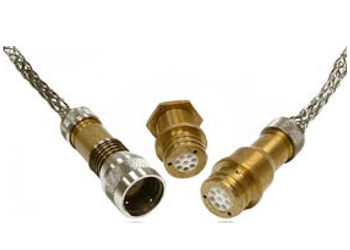
Mining electrical connections must run non-stop through heavy water, coal dust, violent machine vibration, severe rock impacts, and scorching temperature swings. Choosing proper mining connectors isn't about finding a quick plug that snaps onto a trailing cable. You have to balance raw electrical loads, heavy machinery specs, harsh underground environments, grounding arrangements, and strict safety rules. Becker Mining USA builds mine-duty connectors and explosion-proof cable hardware designed to keep heavy industrial gear running safely underground.
Key Takeaways
- Connectors must survive extreme mechanical shock, high moisture, and constant electrical stress.
- Check voltage, amp ratings, conductor sizes, ground wires, and pin layouts before buying.
- Hazardous gaseous mines require certified explosion-proof or permissible connector assemblies.
- Ground-check monitoring protects underground crews by verifying continuous ground line integrity.
- Becker Mining USA manufactures A-size through G-size connectors alongside specialized explosion-proof solutions.
- Regular maintenance and careful inspection are mandatory even on the toughest certified hardware.
Why Does Connector Selection Impact Daily Mine Operations?
Wrong connector choices trigger expensive unscheduled downtime and hazardous electrical faults underground. Standard commercial plugs disintegrate under heavy equipment vibration, constant cable jerking, mud, and continuous electrical strain. Becker Mining USA designs mine-duty hardware to withstand severe mechanical punishment and maintain rock-solid grounding across every shift.
The reality on the ground is simple: mine power cables take constant abuse. A single failing coupling can stop a continuous miner dead in its tracks.
Mine electrical hardware faces extreme operating stresses daily:
- Violent physical shaking from rock crushers and mobile shuttle cars
- Rapid coupling and uncoupling during rapid equipment moves
- Deep water accumulation, slurry pools, and thick mud exposure
- Fine coal dust and gritty abrasive mineral particles
- Direct hits from falling rock and heavy boots
- Massive tension forces from pulling heavy cables around tight pillars
- Extreme heat shifts from ambient mine air to high-amp cable runs
U.S. operators must follow strict federal safety standards set by MSHA. Using unapproved gear in hazardous areas creates massive liability and safety risks. In gassy underground pockets, Becker Mining USA supplies MSHA-certified explosion-proof enclosures, glands, and connectors built to keep hot internal sparks from igniting mine air. Cheap pricing means nothing if the hardware fails inspection or drops power during a shift.
What Are Heavy-Duty Mining Connectors Used For?
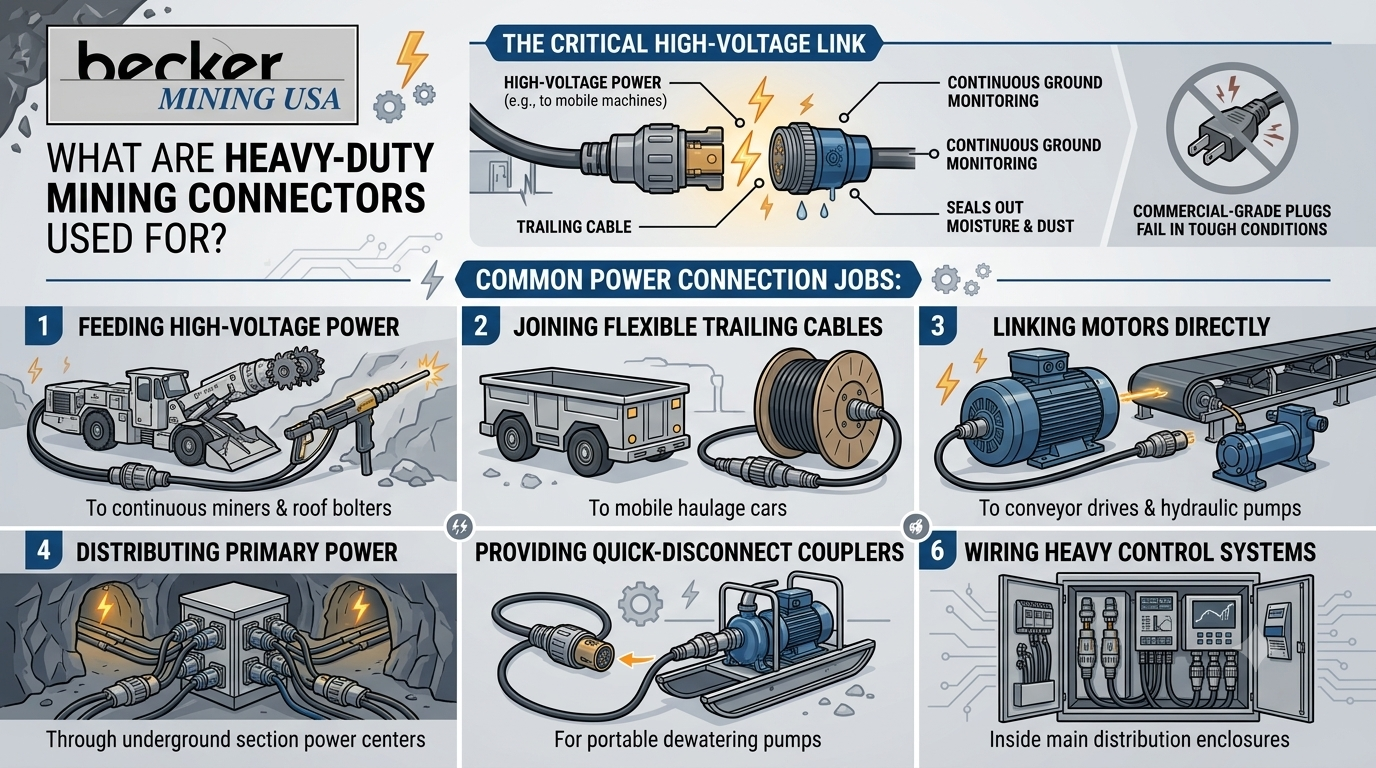
Mining connectors form the high-voltage electrical link between mobile mining machines, power distribution boxes, trailing cables, and control systems. These rugged couplers maintain continuous ground monitoring and seal out moisture while feeding steady electricity to heavy equipment. Commercial-grade plugs short out immediately in tough underground conditions.
Common power connection jobs include:
- Feeding high-voltage power into continuous miners and roof bolters
- Joining flexible trailing cables to mobile haulage cars
- Linking electric motors directly to conveyor drives and hydraulic pumps
- Distributing primary power through underground section power centers
- Providing quick-disconnect couplers for portable dewatering pumps
- Wiring heavy control systems inside main distribution enclosures
Here is the part most contractors won't tell you: the plug is only half the battle. Your cable strain reliefs, pin retention, gland seals, and ground connections must work as a single tough system. Becker Mining USA produces a full line of heavy connections including A Size, B Size, C Size, D Size, F Size, F Size XP, G Size, Ultimate XP, Ultra 8, and Smart Coupler systems.
GET IN TOUCH
In a hurry? Call us at 276-285-3841
How Do You Select the Right Connector Configuration?
Picking the right hardware requires matching the physical build, grounding system, and exact electrical load of your machine. Skipping these basic checks leads to melted pins and blown breakers.
Step 1: Verify Electrical Load & Cable Specs
- Calculate maximum operational voltage and continuous load amperage.
- Match the plug's contact configuration to your specific conductor layout and wire size.
- Verify whether the circuit feeds raw power or sensitive control signals.
Step 2: Match Grounding & Protection Needs
- Connect the plug body directly into the mine ground network.
- Select plugs built with dedicated ground-check contacts to monitor ground wire continuity.
- Verify that ground circuit timing matches your ground fault relay settings.
Step 3: Assess Environmental & Mechanical Shock Risks
- Pick thick, heavy-duty housing materials that resist physical impacts.
- Install heavy strain-relief clamps to stop tension forces from ripping wires out of terminals.
- Select high-grade rubber seals to block mud, water, and acidic runoff.
Step 4: Evaluate Maintenance & Field Service Access
- Choose quick-latching coupler designs like Smart Coupler or Lever Action models for rapid field swaps.
- Confirm spare internal contacts and replacement seals are stocked locally.
Which Cable Solutions Work Best for Mine Hazards?
Different mining operations need specialized electrical protection. Match your gear to your specific working environment:
Mobile Machinery Lines
- Demands heavy mechanical protection to handle continuous dragging across sharp rocks.
- Uses heavy strain-relief glands to absorb sharp pulls from moving haulage cars.
Hazardous Gassy Locations
- Requires MSHA-certified permissible equipment to prevent gas ignition.
- Utilizes flame-path explosion-proof housings like the Ultimate XP or F Size XP series.
Wet Dewatering & Sump Sites
- Relies on tight rubber compression glands to seal out high-pressure water.
- Prevents short circuits in wet underground collection sumps.
How Do Standard Connectors Compare to Explosion-Proof Couplers?
Selecting between standard mine-duty and explosion-proof couplers depends on your mine's safety classification and methane risk.
|
|
|
|
|
|
|
|
|
|
|
|
|
|
|
|
|
|
|
|
|
|
|
|
What Key Terms Define Industrial Mine Connections?
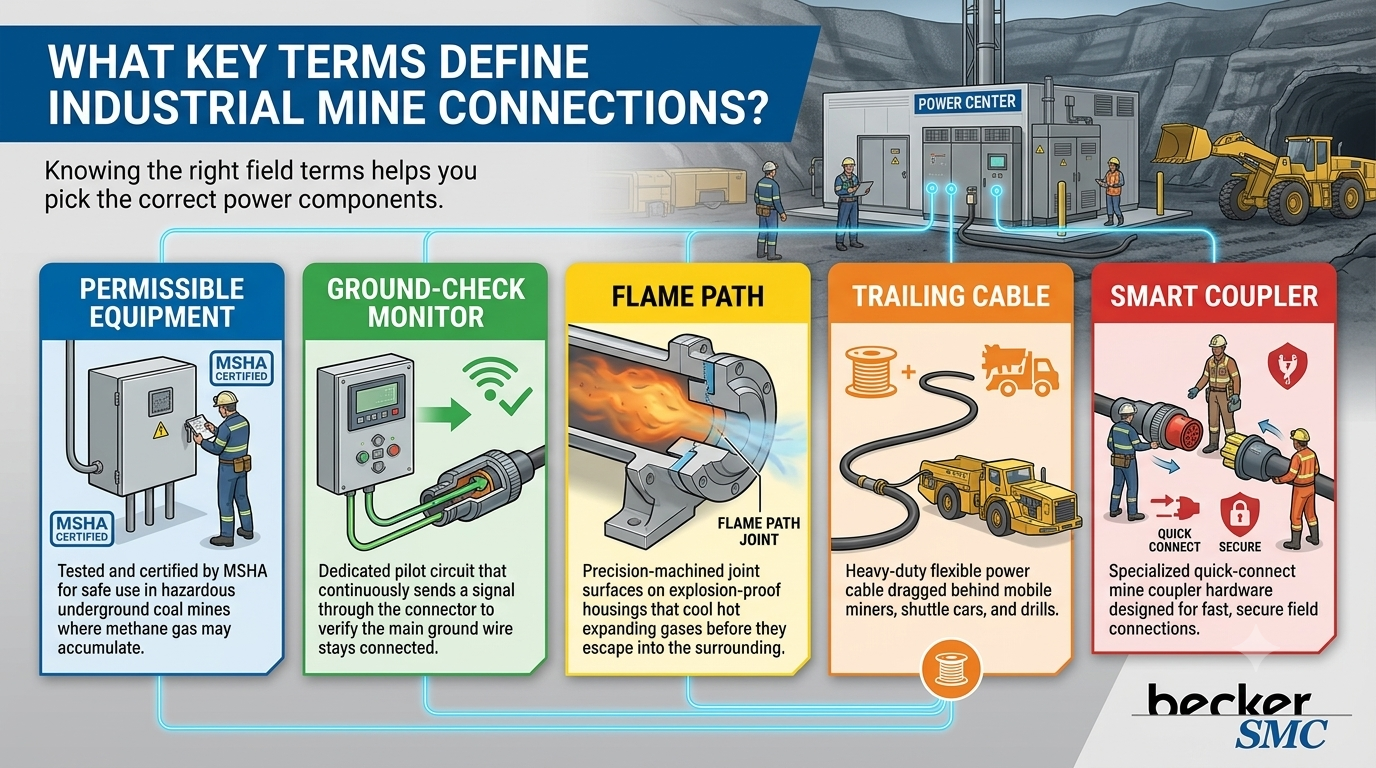
Knowing the right field terms helps you pick the correct power components:
- Permissible Equipment: Electrical gear tested and certified by MSHA for safe use in hazardous underground coal mines where methane gas may accumulate.
- Ground-Check Monitor: A dedicated pilot circuit that continuously sends a signal through the connector to verify the main ground wire stays connected.
- Flame Path: Precision-machined joint surfaces on explosion-proof housings that cool hot expanding gases before they escape into the surrounding atmosphere.
- Trailing Cable: Heavy-duty flexible power cable dragged behind mobile miners, shuttle cars, and drills.
- Smart Coupler: Specialized quick-connect mine coupler hardware designed for fast, secure field connections.
GET IN TOUCH
In a hurry? Call us at 276-285-3841
Practical Advice from the Field
Pro Tip: Never rely solely on a plug's physical size or bolt pattern when replacing gear. Always verify pin layout, amp ratings, and ground-check pin lengths. Installing an underrated plug into a high-draw circuit will cause thermal damage long before the breaker trips.
How Can Mine Operators Keep Power Running Safely?
Selecting the right mining connectors requires matching electrical capacity, mechanical strength, and MSHA safety approvals. Becker Mining USA manufactures mine-duty couplers, explosion-proof housings, and power distribution systems built for the toughest underground conditions.
If you are upgrading mobile machinery, replacing worn trailing cable plugs, or designing a complete underground power system, our engineering team can help you select the exact hardware for your application. Contact Becker Mining USA today to discuss your application specs and request an equipment quote.
Frequently Asked Questions
Q: What are the main uses for mining connectors?
A: Mining connectors deliver high-voltage electrical power between trailing cables, mobile miners, power distribution boxes, and pump drives. They create rugged connections that withstand severe vibration, moisture, and dust while protecting crews from electrical hazards.
Q: How do mine-duty connectors differ from industrial plugs?
A: Mine-duty connectors feature heavy-cast housings, reinforced strain reliefs, and integrated ground-check pins that standard industrial plugs lack. They survive direct physical impacts, continuous water exposure, and heavy cable pulling.
Q: Are explosion-proof connectors required in all underground mines?
A: No, explosion-proof connectors are required only in hazardous areas where combustible methane gas or coal dust may gather. Mine operators must review MSHA requirements to determine if permissible gear is needed for specific face or return air locations.
Q: Why is ground-check continuity critical on mine power cables?
A: Ground-check circuits continuously verify that the safety ground wire remains fully connected to protect crews from electrical shock. If a cable gets damaged or a plug pulls apart, the ground monitor trips the breaker instantly.
Q: When should damaged cable connectors be replaced?
A: Replace connectors immediately if you find cracked housings, pitted copper contacts, damaged rubber seals, or stripped locking threads. Using worn connectors leads to arcing, short circuits, and unscheduled downtime.
Products We Offer:
- Explosion Proof Equipment
- Transformers
- Arc Guard
- Longwall Electrical Systems
- Capacitor Trip Devices
- Electrical Equipments like capacitor banks, switch houses, junctions, and splice boxes.
Power up your productivity with Becker Mining's ground fault relays - the reliable and efficient solution for all your power distribution needs. Call us today!